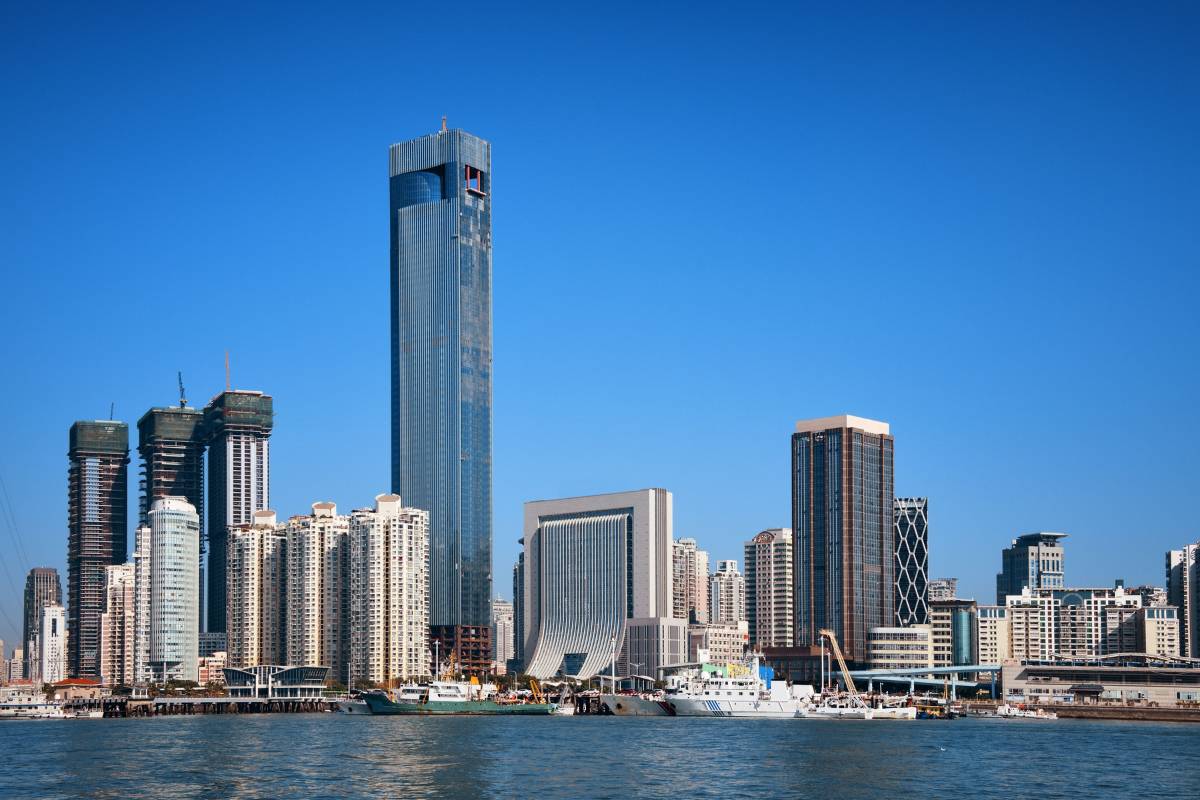
There is a stretch of coast in southern China, running from Zhangzhou through Xiamen and Quanzhou and down into Chaozhou, Shantou and Meizhou, that many Malaysian Chinese families originally came from.
That gives this trip an extra layer. The sights are excellent on their own terms, with a car-free island of old villas, giant circular earth houses you can walk inside, an ancient port city and some of the finest food in China. But the villages, the temples and the dialects here are also the ones your grandparents grew up hearing about.
The connection is quite specific. Hokkien families came from Quanzhou and Zhangzhou, and the difference is still audible, since Penang Hokkien follows the Zhangzhou dialect while Hokkien in the Klang Valley and Johor is Quanzhou-accented. Teochew families came from the counties around Chaozhou and left through the port of Shantou, which older Malaysians still call Swatow. Hakka families came mostly from Meizhou and western Fujian. This route passes through all of them.
The Fujian Tulou
The tulou are the reason most people book, and they live up to it.
These are enormous circular communal houses built of packed earth, with walls almost two metres thick, a single entrance and no windows low down, because they were built to keep an entire clan safe. The largest once held hundreds of people.
You see them two ways. From a hillside viewpoint you look down on a cluster sitting in green valleys, which is the classic photograph. Then you go inside, and that is the part people remember: an open circular courtyard with an ancestral hall at the centre, four storeys of wooden galleries running all the way around, laundry hanging out and chillies drying in the sun, with families still living there today.
The grandest is known as the King of Tulou, a building of four concentric rings and hundreds of rooms where dozens of families still live. You can walk the ground floor ring, buy tea from residents and climb for a view down into the courtyard. Give this a full day.
Quanzhou
Quanzhou was once among the greatest ports in the world, and traders across Asia and Europe knew it by name. It is now a UNESCO World Heritage city.
Kaiyuan Temple is the one to see, a large shaded complex still in daily use, with two enormous stone pagodas carved with Buddhist figures. The street outside offers the best street food in the city.
Just north of town you can walk across a very long, very low stone bridge that has spanned a tidal estuary for nearly a thousand years. The builders solved the problem of shifting foundations by growing oysters on the piers so the shellfish would bind the stone together, and it worked.
The highlight for many visitors is Xunpu village, where the houses are built from oyster shells set into sea mud, giving whole walls a texture unlike anything else. The women here wear a coiled bun ringed with two or three layers of fresh flowers, and you can have your hair done the same way at a village studio. It has become one of the most popular things to do in Fujian and makes a wonderful photograph.
Gulangyu and Xiamen
Gulangyu is a small island a short ferry ride from Xiamen, with no cars and no bicycles, so you simply walk it. There are hundreds of historic villas in a distinctive style found nowhere else, along with gardens, small beaches, cafés and a viewpoint at the top of the island. It is also known as Piano Island, and there is a museum of antique pianos in one of the gardens. Allow at least half a day.
In Xiamen itself, Zengcuoan is an old fishing village turned into a dense quarter of small shops, cafés and guesthouses, at its best in the evening. Shapowei, the city's original harbour, is now lined with workshops and restaurants around the old fishing basin. A long elevated walkway runs across the city through the treetops, and you can join it for whatever stretch you like. The ring road around the island has a cycle path and beaches along it.
Chaozhou and Shantou
Chaozhou is one of the best preserved old cities in southern China, and it is a walking city.
Its famous bridge is unlike any you have crossed. The centre section is not fixed, but formed of pontoon boats that open to let ships through and close again for pedestrians. Nearby, a long street runs beneath tall memorial archways and is lined with shops selling embroidery, woodcarving, hand-beaten tinware and tea sets.
Chaozhou is also where you eat properly. Teochew cooking is one of China's great regional kitchens, with braised goose, oyster omelette, beef hotpot and gongfu tea served in tiny cups all afternoon.
In nearby Shantou you can walk through an extraordinary mansion of hundreds of rooms, built by an overseas Chinese businessman who made his fortune abroad and came home to spend it. They call it the Little Forbidden City of Chaoshan, and its mix of local tradition with Roman columns and patterned tiles will look immediately familiar to anyone who knows the shophouses of Penang and Melaka.
Meizhou
Meizhou is the Hakka heartland, and its museum of Hakka culture is the first of its kind in China, including a whole section on overseas Chinese families.
The place that tends to land hardest is the old river town of Songkou. This was where Hakka emigrants boarded boats to travel downriver and then south to Nanyang. At its peak the quayside had a thousand shops and hundreds of vessels moored in a day. Standing on that landing is a strange feeling if your own family was one of them.
Meizhou is also good for Hakka food, particularly salt-baked chicken, stuffed tofu and preserved vegetable pork belly.
At SATravel.my, we make your journey easier and more enjoyable. We offer China tour packages with experienced local guides, comfortable hotels and smooth travel arrangements. Let us take care of the details, so you can relax and enjoy the beauty and heritage of Fujian and Chaoshan with peace of mind.